What the schedule checks before it accepts a booking
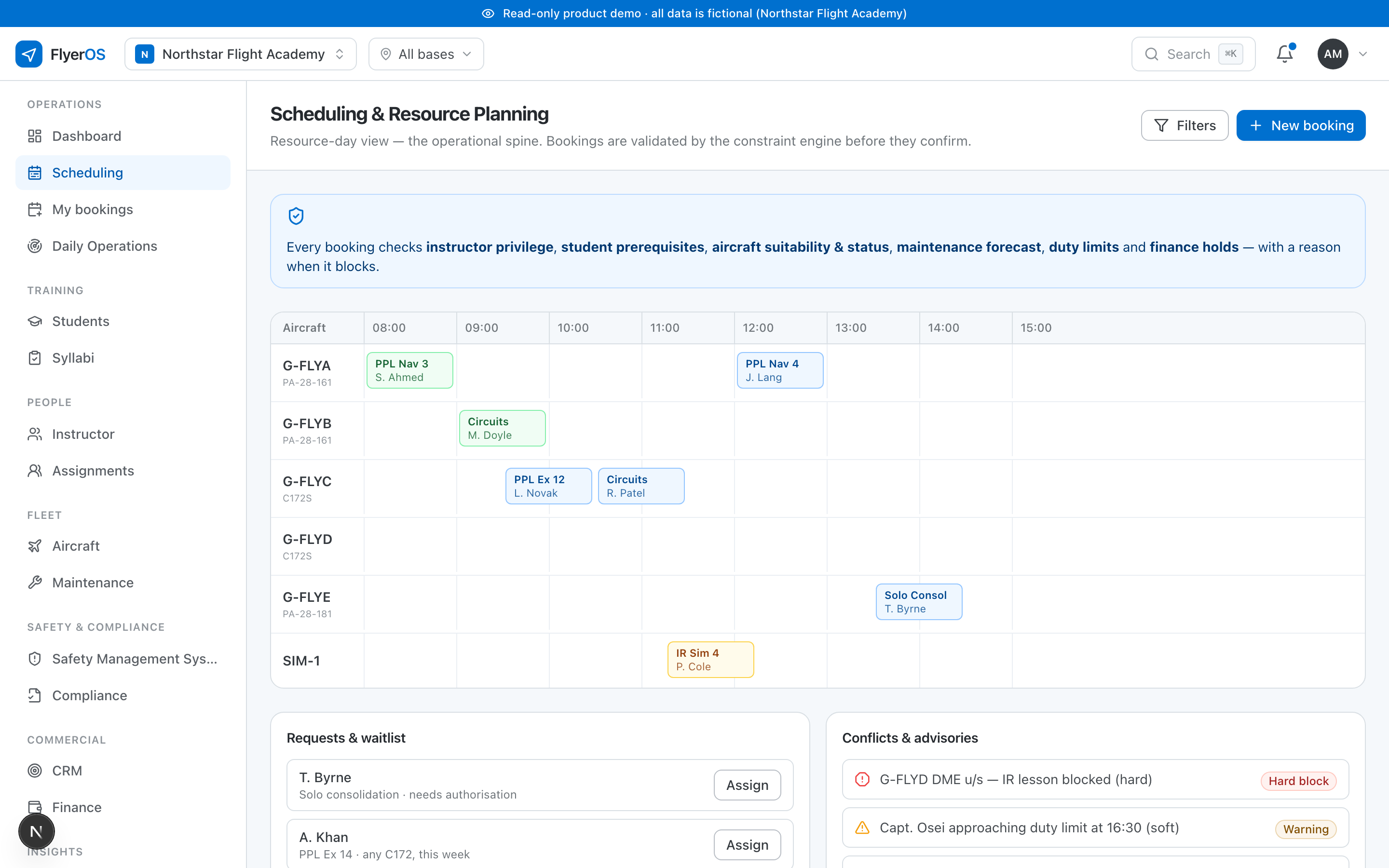
The full set of things FlyerOS checks before a booking is allowed to stand, in one place.
Last reviewed
A calendar records what someone intends to do. FlyerOS checks whether it can actually happen before it lets the booking stand, and it does that against the moment the flight is scheduled for, not the moment you are booking it.
The checks
When you propose a booking, FlyerOS evaluates all of the following together:
- Instructor privilege: is the instructor licensed, rated and current for this exercise, and within their privileges?
- Document validity: are the medicals, ratings and other documents the flight relies on in date for the date of the flight?
- Aircraft status: is the aircraft serviceable, or does it carry a defect or restriction that rules this flight out?
- Maintenance forecast: will the aircraft still be inside its maintenance limits at the time of the flight, not just today?
- Duty limits: would the flight breach an instructor's flight-time or duty limits, evaluated as rolling windows?
- Finance holds: is there a finance hold that should stop the booking?
If everything passes, the booking stands. If something does not, the booking is refused with a plain-English reason, not a red cross with no explanation.
Hard blocks and soft warnings
Not everything is absolute. The conflicts panel separates the two:
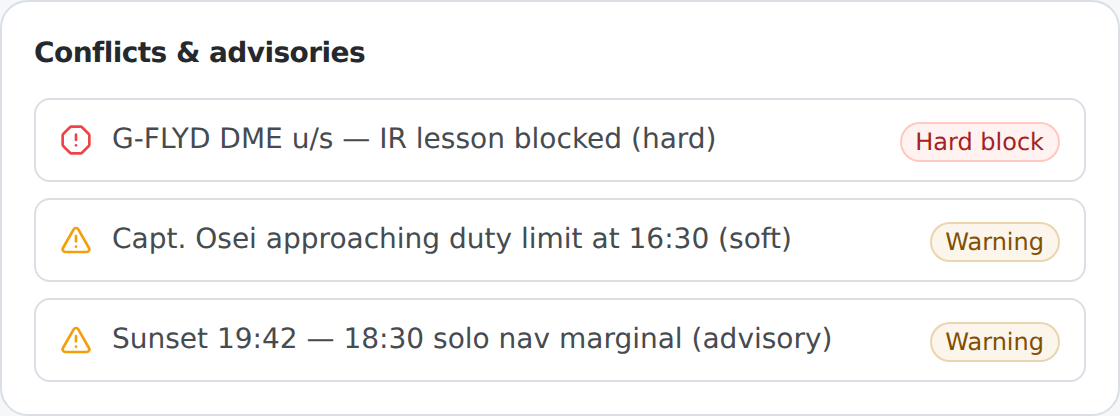
- A hard block means the flight cannot legally or safely go, and it cannot be booked. An unserviceable aircraft is a hard block.
- A soft warning flags something worth a human decision but does not forbid it, for example approaching a duty limit. Where your organisation allows it, a warning can be overridden by someone with the authority, and the override is recorded. See Overriding a warning, and who may.
Checked again at dispatch
The same checks run a second time at the dispatch gate, against the state right then. A medical that expired overnight, or a defect raised this morning, is caught before the aircraft is released, even though the booking was valid when it was made. See The pre-dispatch gate, and what it stops.